
| Δείκτης | Τιμή |
|---|---|
| Στρατιωτικές δαπάνες (% ΑΕΠ) | 2.27 %SIPRI via World Bank WDI [2024] |
| Στρατιωτικές δαπάνες | 86,100,000,000 $ ΗΠΑSIPRI via World Bank WDI [2024] |
| Προσωπικό ενόπλων δυνάμεων | 3,070,000 άτομαWorld Bank WDI [2020] |
| Εισαγωγές όπλων | 1,170,000,000 $ ΗΠΑSIPRI via World Bank WDI [2024] |
| Εξαγωγές όπλων | 25,000,000 $ ΗΠΑSIPRI via World Bank WDI [2024] |
| Στρατιωτικές δυνάμεις και δυνάμεις ασφαλείας | Indian Armed Forces (IAF): Army, Navy, Air Force, Coast GuardMinistry of Home Affairs: Central Police Organization, Central Armed Police Forces (includes Assam Rifles, Border Security Force, Central Industrial Security Force, Central Reserve Police Force, Indo-Tibetan Border Police, National Security Guards, Sashastra Seema Bal) (2025); note: note 1: the Border Security Force (BSF) is responsible for the Indo-Pakistan and Indo-Bangladesh borders; the Sashastra Seema Bal (SSB or Armed Border Force) guards the Indo-Nepal and Indo-Bhutan bordersnote 2: the Central Reserve Police Force (CRPF) includes a Rapid Reaction Force (RAF) for riot control and the Commando Battalion for Resolute Action (COBRA) for counter-insurgency operations note 3: the Assam Rifles are under the administrative control of the Ministry of Home Affairs, while operational control falls under the Ministry of Defense (specifically the Indian Army)CIA World Factbook [2025] · 2026 archive |
| Ηλικία και υποχρέωση στράτευσης | ages vary by branch of service and positions, but generally 17-27 years of age for voluntary military service for men and women; no conscription (2025); note: note 1: in 2022, the Indian Government began recruiting men aged 17.5-21 annually to serve on 4-year contracts; at the end of their tenure, 25% would be retained for longer terms of service, while the remainder would be forced to leave the military, although some of those leaving would be eligible to serve in the Coast Guard, the Merchant Navy, civilian positions in the Ministry of Defense, and in the paramilitary forces of the Ministry of Home Affairsnote 2: the Indian military accepts citizens of Nepal and Bhutan; descendants of refugees from Tibet who arrived before 1962 and have resided permanently in India; peoples of Indian origin from nations such as Burma, the Democratic Republic of the Congo, Ethiopia, Kenya, Malawi, Pakistan, Sri Lanka, Tanzania, Uganda, and Vietnam with the intention of permanently settling in India; eligible candidates from “friendly foreign nations” may apply to the Armed Forces Medical Services note 3: the British began to recruit Nepalese citizens (Gurkhas) into the East India Company Army during the Anglo-Nepalese War (1814-1816), and the Gurkhas subsequently were brought into the British Indian Army; following the partition of India in 1947, an agreement between Nepal, India, and Great Britain allowed for the transfer of the 10 regiments from the British Indian Army to the separate British and Indian armies; six regiments of Gurkhas (aka Gorkhas in India) regiments went to the new Indian Army; a seventh regiment was later addedCIA World Factbook [2025] · 2026 archive |
| Εισαγωγές όπλων (USD) | 1,170,000,000 $ ΗΠΑSIPRI via World Bank WDI [2024] |
| Εξαγωγές όπλων (USD) | 25,000,000 $ ΗΠΑSIPRI via World Bank WDI [2024] |
| Στρατιωτικές δαπάνες (% ΑΕΠ) | 2.27 %SIPRI via World Bank WDI [2024] |
| Στρατιωτικές δαπάνες (USD) | 86,100,000,000 $ ΗΠΑSIPRI via World Bank WDI [2024] |
Άμυνα
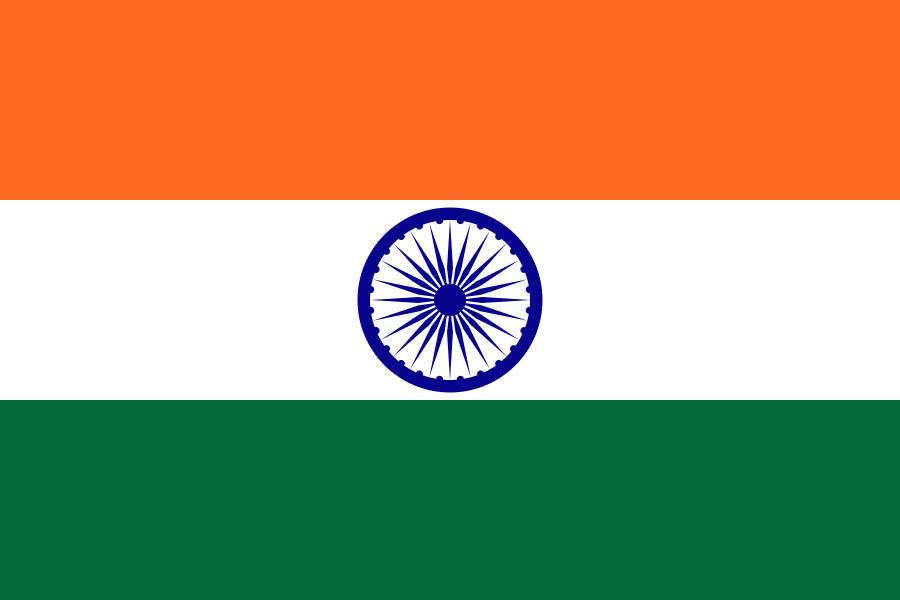
Ινδία
Μεταδεδομένα ενότητας
Έτος δεδομένων2025
ΈκδοσηDatabook 2026
Κάλυψη11/11
ΆδειαCC-BY

Σύνολα δεδομένων σε αυτή τη σελίδα
- World Bank WDIworld_bank_wdiΈκδοση: 2024
- CIA World Factbookcia_factbookΈκδοση: 2025
Σχετικά με αυτά τα δεδομένα
Στο Databook, η ενότητα Άμυνα της χώρας Ινδία συγκεντρώνει 11 δείκτες από 2 ανοιχτά σύνολα δεδομένων, μεταξύ των οποίων World Bank WDI, CIA World Factbook. Βασικά στοιχεία: στρατιωτικές δαπάνες (% αεπ) (2.27 %), στρατιωτικές δαπάνες (86,100,000,000 $ ΗΠΑ). Δεδομένα με έτος αναφοράς 2025. Κάθε τιμή φέρει πηγή και έτος δημοσίευσης, με ανοιχτές άδειες.