| Indicator | Value |
|---|---|
| ISO 3166 alpha-2 | GNISO 3166 [2024] |
| ISO 3166 alpha-3 | GINISO 3166 [2024] |
| Capital | ConakryGeoNames [2024] |
| Continent | AfricaGeoNames [2024] |
| Common name | GuineaCIA World Factbook [2025] · 2026 archive |
| Official name | Republic of GuineaCIA World Factbook [2025] · 2026 archive |
| Local name | GuinéeCIA World Factbook [2025] · 2026 archive |
| Etymology | the country is named after the Guinea region of West Africa that lies along the Gulf of Guinea, but the name itself derives from the Tuareg word aginaw, meaning "black people"CIA World Factbook [2025] · 2026 archive |
| Government type | Presidential republicCIA World Factbook [2025] · 2026 archive |
| Independence | 2 October 1958 (from France)CIA World Factbook [2025] · 2026 archive |
| National holiday | Independence Day, 2 October (1958)CIA World Factbook [2025] · 2026 archive |
| Head of state | Mamadi DOUMBOUYA (Pres.)CIA World Leaders [2025] |
| Currency code (ISO 4217) | GNFISO 4217 Currency Codes [2026] |
| Currency | Guinean FrancISO 4217 Currency Codes [2026] |
| Administrative subdivisions | 8ISO 3166-2 Subdivisions [2026] |
| Subdivision names | Boké / Conakry / Faranah / Kankan / Kindia / Labé / Mamou / NzérékoréISO 3166-2 Subdivisions [2026] |
| Historical overview | No authoritative open source found |
| National symbols | elephantCIA World Factbook [2025] · 2026 archive |
| National anthem | title: "Liberté" (Liberty); lyrics/music: unknown/Fodeba KEITA; history: adopted 1958CIA World Factbook [2025] · 2026 archive |
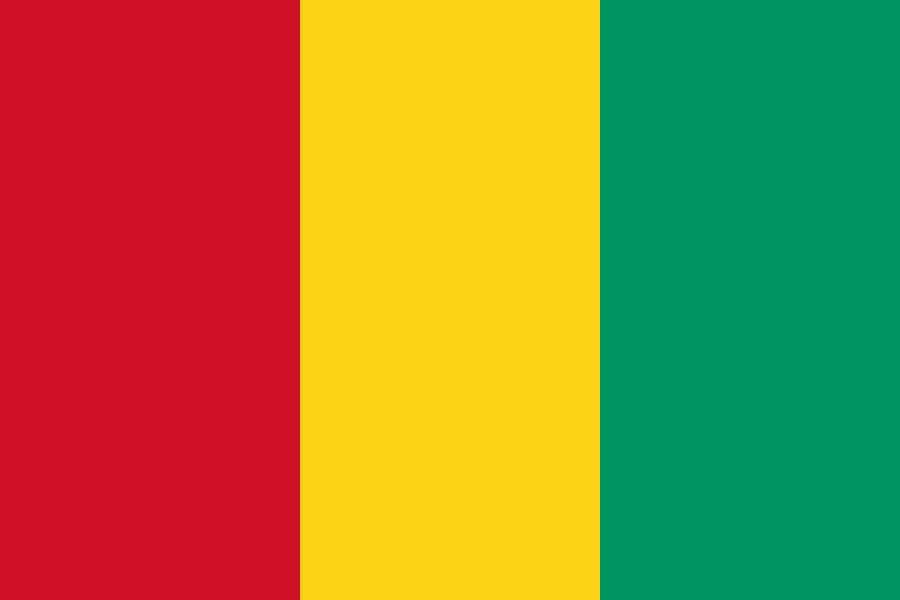
| National colors | red, yellow, greenCIA World Factbook [2025] · 2026 archive |
| Citizenship rules | citizenship by birth: no; citizenship by descent only: at least one parent must be a citizen of Guinea; dual citizenship recognized: no; residency requirement for naturalization: naCIA World Factbook [2025] · 2026 archive |
the country is named after the Guinea region of West Africa that lies along the Gulf of Guinea, but the name itself derives from the Tuareg word aginaw , meaning "black people"
description: three equal vertical bands of red (left side), yellow, and green meaning: red stands for the people's sacrifice for liberation and work; yellow for the sun, the riches of the earth, and justice; green for the country's vegetation and unity history: uses the colors of the Pan-African movement
Source: CIA World Factbook (Historical Archive — final edition) · CC0 · Edition 2026-05