| Indicator | Value |
|---|---|
| ISO 3166 alpha-2 | TKISO 3166 [2024] |
| ISO 3166 alpha-3 | TKLISO 3166 [2024] |
| Capital | No authoritative open source found |
| Continent | OceaniaGeoNames [2024] |
| Common name | TokelauCIA World Factbook [2025] · 2026 archive |
| Official name | No authoritative open source found |
| Local name | TokelauCIA World Factbook [2025] · 2026 archive |
| Etymology | the name comes from the Polynesian word tokelau, meaning "north wind;" the name "Tokelau Islands" was adopted in 1946, and the shortened form in 1976CIA World Factbook [2025] · 2026 archive |
| Government type | parliamentary democracy under a constitutional monarchyCIA World Factbook [2025] · 2026 archive |
| Independence | none (territory of New Zealand)CIA World Factbook [2025] · 2026 archive |
| National holiday | Waitangi Day, 6 February (1840); note: Treaty of Waitangi established British sovereignty over New ZealandCIA World Factbook [2025] · 2026 archive |
| Head of state | No authoritative open source found |
| Currency code (ISO 4217) | NZDISO 4217 Currency Codes [2026] |
| Currency | New Zealand DollarISO 4217 Currency Codes [2026] |
| Administrative subdivisions | No authoritative open source found |
| Subdivision names | No authoritative open source found |
| Historical overview | No authoritative open source found |
| National symbols | tuluma (fishing tackle box)CIA World Factbook [2025] · 2026 archive |
| National anthem | title: "God Save the King"; lyrics/music: unknown; history: official anthem, as a territory of New Zealand; normally played only when a member of the royal family or the governor-general is presentCIA World Factbook [2025] · 2026 archive |
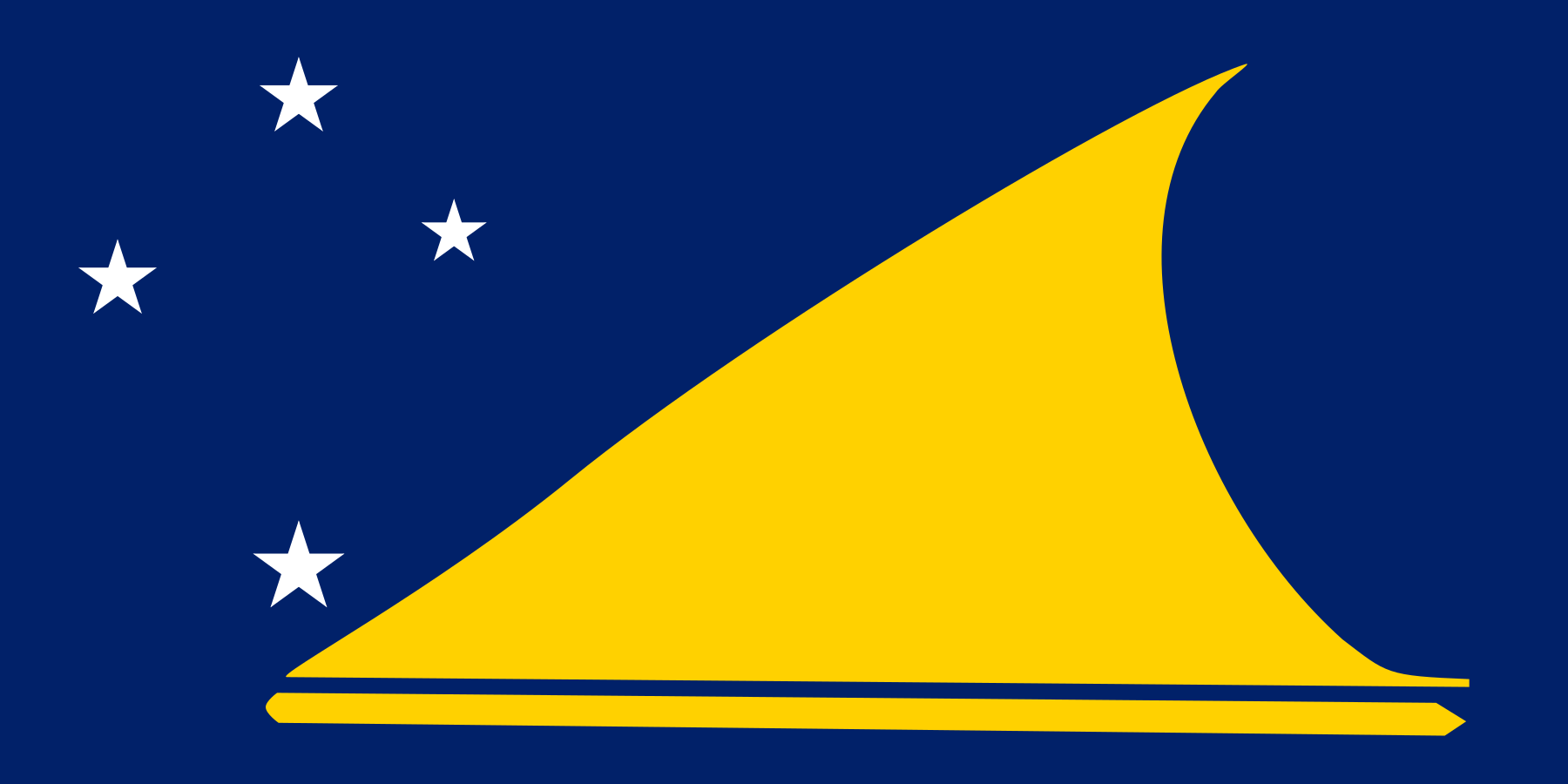
| National colors | blue, yellow, whiteCIA World Factbook [2025] · 2026 archive |
| Citizenship rules | see New ZealandCIA World Factbook [2025] · 2026 archive |
the name comes from the Polynesian word tokelau , meaning "north wind;" the name "Tokelau Islands" was adopted in 1946, and the shortened form in 1976
description: a stylized yellow Tokelauan canoe on a dark blue field sails toward four white five-pointed stars on the left side meaning: the stars are the Southern Cross constellation and represent the role of Christianity in Tokelauan culture; the stars and canoe together symbolize the country navigating into the future; yellow stands for happiness and peace, and blue for the ocean
Source: CIA World Factbook (Historical Archive — final edition) · CC0 · Edition 2026-05