
| Indicator | Value |
|---|---|
| Total population | 9,060,000–9,130,000 peopleUN DESA WPP [2024] 9,057,000 people·World Bank WDI [2024] 9,133,000 people |
| Median age | 40.9 yearsUN DESA WPP [2024] |
| Life expectancy | 74.4 yearsWorld Bank WDI [2024] 74.37 years·UNDP HDI [2023] 74.43 years |
| Ethnic groups | Belarusian 83.7%, Russian 8.3%, Polish 3.1%, Ukrainian 1.7%, other 2.4%, unspecified 0.9% (2009 est.)CIA World Factbook [2025] · 2026 archive |
| Languages | Russian (official) 71.4%, Belarusian (official) 26%, other 0.3% (includes small Polish- and Ukrainian-speaking minorities), unspecified 2.3% (2019 est.)CIA World Factbook [2025] · 2026 archive |
| Religions | Orthodox 48.3%, Catholic 7.1%, other 3.5%, non-believers 41.1% (2011 est.)CIA World Factbook [2025] · 2026 archive |
| Urbanization | 80.7% of total population (2023)CIA World Factbook [2025] · 2026 archive |
| Population growth | -0.499 %World Bank WDI [2024] |
| Birth rate | 7.03 per 1,000World Bank WDI [2024] |
| Death rate | 13.1 per 1,000World Bank WDI [2024] |
| Urban population | 79.2 %World Bank WDI [2024] |
| Languages (structured) | Balkan Romani / Baltic Romani / Belarusian / Central Romani / Eastern Yiddish / Erzya / Latvian / Lithuanian / Polish / Russian / Rusyn / Sinte-Manus Romani / Tatar / Ukrainian / Vlax RomaniGlottolog [2026] |
Population
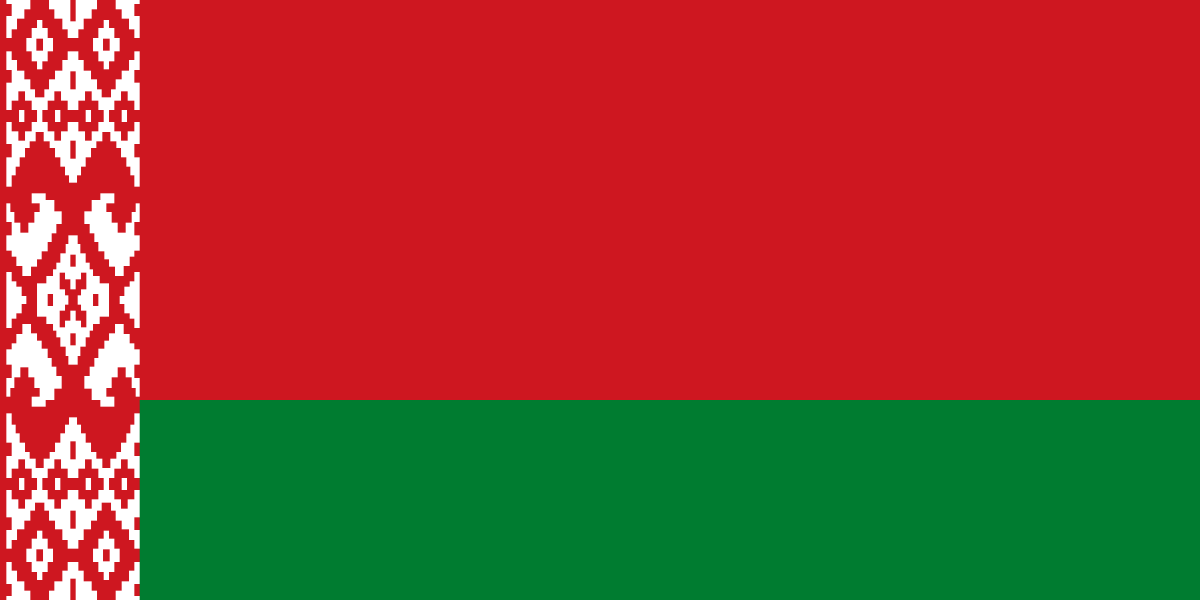
Belarus
Section metadata
Data year2026
EditionDatabook 2026
Coverage12/12
LicenseCC-BY

Datasets on this page
- UN DESA WPPun_desa_wppEdition: 2024
- World Bank WDIworld_bank_wdiEdition: 2024
- UNDP HDIundp_hdiEdition: 2023
- CIA World Factbookcia_factbookEdition: 2025
- Glottologglottolog_languagesEdition: 2026
About this data
Belarus's population on Databook compiles 12 indicators from 5 open datasets including UN DESA WPP, World Bank WDI, UNDP HDI. Key figures include total population (9,060,000–9,130,000 people), median age (40.9 years). Data is referenced to 2026. Every value carries its source and publication year, published under open licenses.