| Indicator | Value |
|---|---|
| ISO 3166 alpha-2 | SZISO 3166 [2024] |
| ISO 3166 alpha-3 | SWZISO 3166 [2024] |
| Capital | MbabaneGeoNames [2024] |
| Continent | AfricaGeoNames [2024] |
| Common name | EswatiniCIA World Factbook [2025] · 2026 archive |
| Official name | Kingdom of EswatiniCIA World Factbook [2025] · 2026 archive |
| Local name | eSwatiniCIA World Factbook [2025] · 2026 archive |
| Etymology | the country name derives from 19th century King MSWATI II, under whose rule Swati territory was expanded and unifiedCIA World Factbook [2025] · 2026 archive |
| Government type | Absolute monarchyCIA World Factbook [2025] · 2026 archive |
| Independence | 6 September 1968 (from the UK)CIA World Factbook [2025] · 2026 archive |
| National holiday | Independence Day (Somhlolo Day), 6 September (1968)CIA World Factbook [2025] · 2026 archive |
| Head of state | MSWATI III (King)CIA World Leaders [2025] |
| Currency code (ISO 4217) | SZLISO 4217 Currency Codes [2026] |
| Currency | LilangeniISO 4217 Currency Codes [2026] |
| Administrative subdivisions | 4ISO 3166-2 Subdivisions [2026] |
| Subdivision names | Hhohho / Lubombo / Manzini / ShiselweniISO 3166-2 Subdivisions [2026] |
| Historical overview | No authoritative open source found |
| National symbols | lion, elephantCIA World Factbook [2025] · 2026 archive |
| National anthem | title: "Nkulunkulu Mnikati wetibusiso temaSwati" (O God, Bestower of the Blessings of the Swazi); lyrics/music: Andrease Enoke Fanyana SIMELANE/David Kenneth RYCROFT; history: adopted 1968; uses elements of both ethnic Swazi and Western music stylesCIA World Factbook [2025] · 2026 archive |
| National colors | blue, yellow, redCIA World Factbook [2025] · 2026 archive |
| Citizenship rules | citizenship by birth: no; citizenship by descent only: both parents must be citizens of Eswatini; dual citizenship recognized: no; residency requirement for naturalization: 5 yearsCIA World Factbook [2025] · 2026 archive |
the country name derives from 19th century King MSWATI II, under whose rule Swati territory was expanded and unified
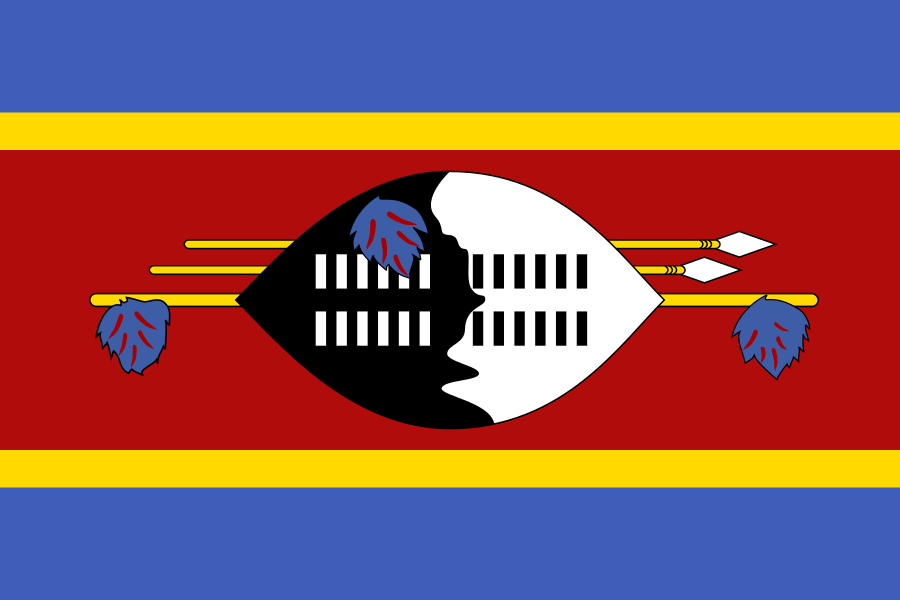
description: three horizontal bands of blue (top), red (triple-width), and blue; the red band is edged in yellow, with a large black-and-white shield in the center that covers two horizontal spears and a staff with feather tassels meaning: blue stands for peace and stability, red for past struggles, and yellow for the mineral resources of the country; the shield, spears, and staff symbolize protection from enemies, and the shield colors stand for ethnic groups living in peaceful coexistence
Source: CIA World Factbook (Historical Archive — final edition) · CC0 · Edition 2026-05