| Indicator | Value |
|---|---|
| ISO 3166 alpha-2 | PGISO 3166 [2024] |
| ISO 3166 alpha-3 | PNGISO 3166 [2024] |
| Capital | Port MoresbyGeoNames [2024] |
| Continent | OceaniaGeoNames [2024] |
| Common name | Papua New GuineaCIA World Factbook [2025] · 2026 archive |
| Official name | Independent State of Papua New GuineaCIA World Factbook [2025] · 2026 archive |
| Local name | PapuaniuginiCIA World Factbook [2025] · 2026 archive |
| Etymology | the name derives from the Malay word pua-pua, describing the tightly curled hair of the Papuan people; Spanish explorer Ynigo ORTIZ de RETEZ applied the term "Nueva Guinea" to the island in 1545 because he thought the locals resembled the peoples of the Guinea coast of AfricaCIA World Factbook [2025] · 2026 archive |
| Government type | parliamentary democracy under a constitutional monarchy; a Commonwealth realmCIA World Factbook [2025] · 2026 archive |
| Independence | 16 September 1975 (from the Australia-administered UN trusteeship)CIA World Factbook [2025] · 2026 archive |
| National holiday | Independence Day, 16 September (1975)CIA World Factbook [2025] · 2026 archive |
| Head of state | James MARAPE (Governor Gen.)CIA World Leaders [2025] |
| Currency code (ISO 4217) | PGKISO 4217 Currency Codes [2026] |
| Currency | KinaISO 4217 Currency Codes [2026] |
| Administrative subdivisions | 22ISO 3166-2 Subdivisions [2026] |
| Subdivision names |
|
| Historical overview | No authoritative open source found |
| National symbols | bird of paradiseCIA World Factbook [2025] · 2026 archive |
| National anthem | title: "O Arise, All You Sons"; lyrics/music: Thomas SHACKLADY; history: adopted 1975CIA World Factbook [2025] · 2026 archive |
| National colors | red, blackCIA World Factbook [2025] · 2026 archive |
| Citizenship rules | citizenship by birth: no; citizenship by descent only: at least one parent must be a citizen of Papua New Guinea; dual citizenship recognized: no; residency requirement for naturalization: 8 yearsCIA World Factbook [2025] · 2026 archive |
the name derives from the Malay word pua-pua , describing the tightly curled hair of the Papuan people; Spanish explorer Ynigo ORTIZ de RETEZ applied the term "Nueva Guinea" to the island in 1545 because he thought the locals resembled the peoples of the Guinea coast of Africa
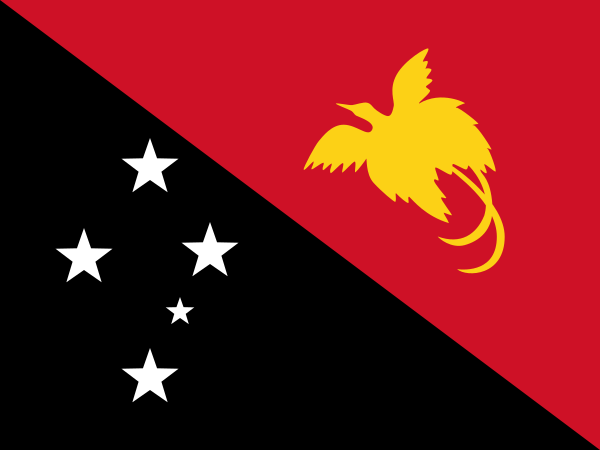
description: divided diagonally from upper-left corner; the upper triangle is red and has a soaring yellow bird of paradise in the center; the lower triangle is black with five five-pointed white stars of the Southern Cross constellation meaning: red, black, and yellow are the country's traditional colors; the bird of paradise is an emblem of regional tribal culture and represents the emergence of Papua New Guinea as a nation; the Southern Cross symbolizes the country's connection with Australia and several other countries in the South Pacific
Source: CIA World Factbook (Historical Archive — final edition) · CC0 · Edition 2026-05