| Indicator | Value |
|---|---|
| ISO 3166 alpha-2 | BOISO 3166 [2024] |
| ISO 3166 alpha-3 | BOLISO 3166 [2024] |
| Capital | SucreGeoNames [2024] |
| Continent | South AmericaGeoNames [2024] |
| Common name | BoliviaCIA World Factbook [2025] · 2026 archive |
| Official name | Plurinational State of BoliviaCIA World Factbook [2025] · 2026 archive |
| Local name | BoliviaCIA World Factbook [2025] · 2026 archive |
| Etymology | the country is named in honor of Simón BOLÍVAR, a 19th-century leader in the South American wars for independenceCIA World Factbook [2025] · 2026 archive |
| Government type | Presidential republicCIA World Factbook [2025] · 2026 archive |
| Independence | 6 August 1825 (from Spain)CIA World Factbook [2025] · 2026 archive |
| National holiday | Independence Day, 6 August (1825)CIA World Factbook [2025] · 2026 archive |
| Head of state | Rodrigo PAZ Pereira (Pres.)CIA World Leaders [2025] |
| Currency code (ISO 4217) | BOBISO 4217 Currency Codes [2026] |
| Currency | BolivianoISO 4217 Currency Codes [2026] |
| Administrative subdivisions | 9ISO 3166-2 Subdivisions [2026] |
| Subdivision names | Chuquisaca / Cochabamba / El Beni / La Paz / Oruro / Pando / Potosí / Santa Cruz / TarijaISO 3166-2 Subdivisions [2026] |
| Historical overview | No authoritative open source found |
| National symbols | llama, Andean condor; two national flowers, the cantuta and the patujuCIA World Factbook [2025] · 2026 archive |
| National anthem | title: "Cancion Patriotica" (Patriotic Song); lyrics/music: Jose Ignacio de SANJINES/Leopoldo Benedetto VINCENTI; history: adopted 1852CIA World Factbook [2025] · 2026 archive |
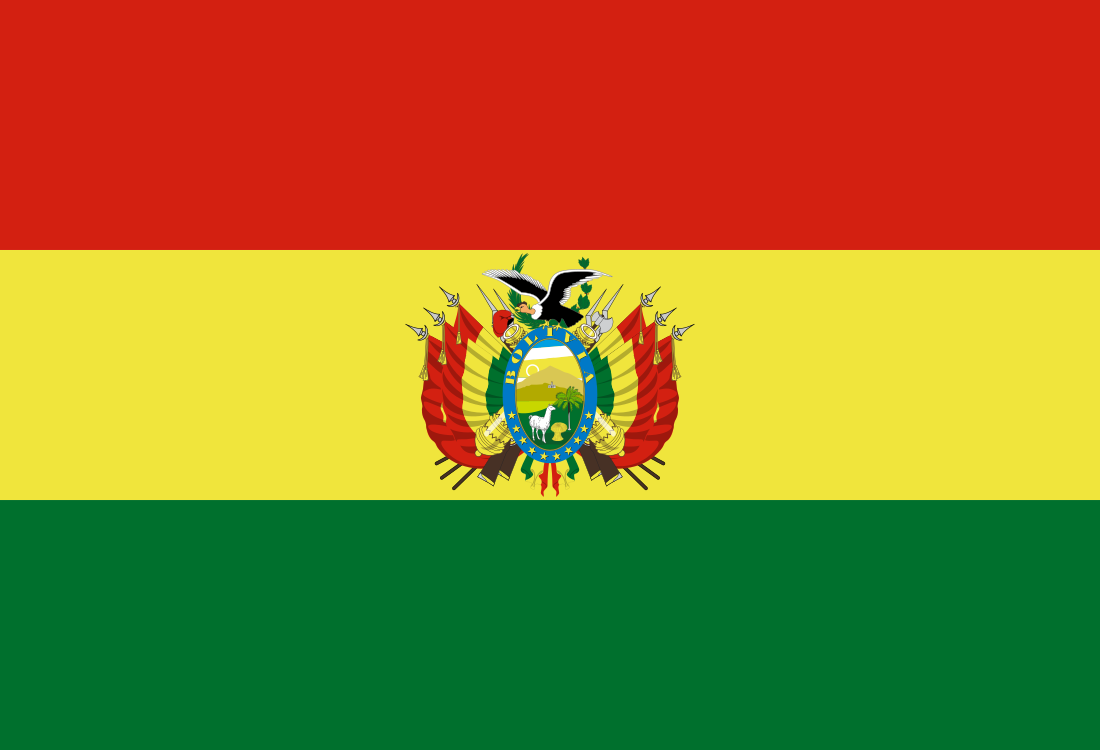
| National colors | red, yellow, greenCIA World Factbook [2025] · 2026 archive |
| Citizenship rules | citizenship by birth: yes; citizenship by descent only: yes; dual citizenship recognized: yes; residency requirement for naturalization: 3 yearsCIA World Factbook [2025] · 2026 archive |
the country is named in honor of Simón BOLÍVAR, a 19th-century leader in the South American wars for independence
description: three equal horizontal bands of red (top), yellow, and green, with the coat of arms centered on the yellow band meaning: red stands for bravery and the blood of national heroes, yellow for the nation's mineral resources, and green for the land's fertility history: in 2009, a presidential decree made it mandatory for a wiphala - - a square, multi-colored flag representing the country's ethnic groups -- to be used alongside the national flag
Source: CIA World Factbook (Historical Archive — final edition) · CC0 · Edition 2026-05