| Indicator | Value |
|---|---|
| ISO 3166 alpha-2 | FOISO 3166 [2024] |
| ISO 3166 alpha-3 | FROISO 3166 [2024] |
| Capital | TorshavnGeoNames [2024] |
| Continent | EuropeGeoNames [2024] |
| Common name | Faroe IslandsCIA World Factbook [2025] · 2026 archive |
| Official name | No authoritative open source found |
| Local name | ForoyarCIA World Factbook [2025] · 2026 archive |
| Etymology | the archipelago's name derives from the Old Norse name Faeroyar, meaning "sheep islands;" faer means "sheep," and -oyar means "islands"CIA World Factbook [2025] · 2026 archive |
| Government type | parliamentary democracy (Faroese Parliament); part of the Kingdom of DenmarkCIA World Factbook [2025] · 2026 archive |
| Independence | none (self-governing overseas administrative division of Denmark)CIA World Factbook [2025] · 2026 archive |
| National holiday | Olaifest (Olavsoka), 29 July (1030); note: commemorates the death in battle of King OLAF II of Norway, later St. OLAFCIA World Factbook [2025] · 2026 archive |
| Head of state | No authoritative open source found |
| Currency code (ISO 4217) | DKKISO 4217 Currency Codes [2026] |
| Currency | Danish KroneISO 4217 Currency Codes [2026] |
| Administrative subdivisions | No authoritative open source found |
| Subdivision names | No authoritative open source found |
| Historical overview | No authoritative open source found |
| National symbols | ramCIA World Factbook [2025] · 2026 archive |
| National anthem | title: "Mitt alfagra land" (My Fairest Land); lyrics/music: Simun av SKAROI/Peter ALBERG; history: adopted 1948; the anthem is also known as "Tu alfagra land mitt" (Thou Fairest Land of Mine); as a self-governing overseas administrative division of Denmark, the Faroe Islands are permitted to have their own national anthemCIA World Factbook [2025] · 2026 archive |
| National colors | Not applicable to this country |
| Citizenship rules | see DenmarkCIA World Factbook [2025] · 2026 archive |
the archipelago's name derives from the Old Norse name Faeroyar, meaning "sheep islands;" faer means "sheep," and - oyar means "islands"
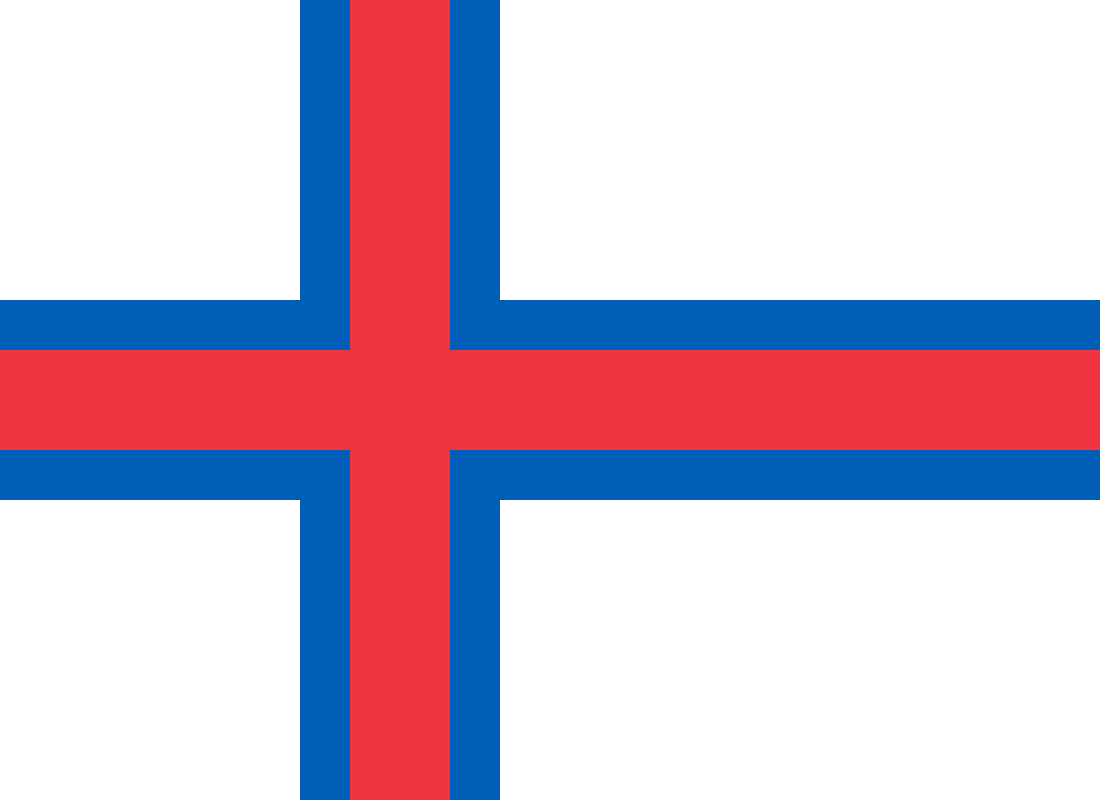
description: white with a red cross outlined in blue that extends to the edges of the flag; the cross is shifted toward the left side in the style of the Dannebrog (Danish flag) meaning: white represents waves breaking on the shore; red and blue are traditional Faroese colors history: the flag is referred to as Merkid, meaning "the banner" or "the mark;" a group of students designed it in 1919, although it wasn't officially adopted until 1940
Source: CIA World Factbook (Historical Archive — final edition) · CC0 · Edition 2026-05