Boundaries shown do not imply endorsement.
In the region
AfghanistanArmeniaAzerbaijanBangladeshBhutanChinaGeorgiaIndiaIranIraqKazakhstanKuwaitKyrgyzstanMongoliaMyanmarNepalOmanQatarRussiaSaudi ArabiaTajikistanTurkeyTurkmenistanUnited Arab EmiratesUzbekistanYemen
Country snapshot
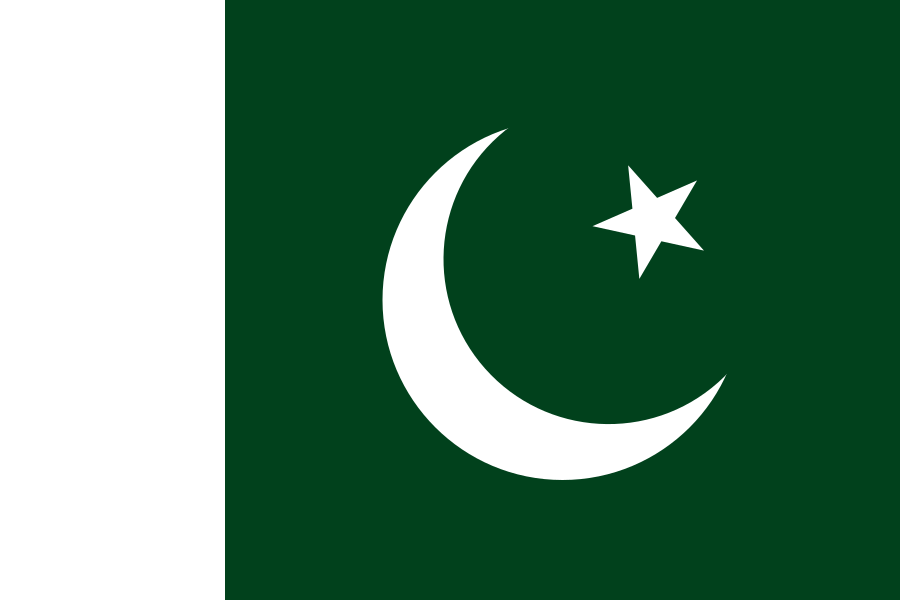
Pakistan| Indicator | Value |
|---|---|
| Official name | Islamic Republic of PakistanCIA World Factbook [2025] · 2026 archive |
| Government type | Federal parliamentary republicCIA World Factbook [2025] · 2026 archive |
| Capital | IslamabadGeoNames [2024] |
| Head of state | Asif Ali ZARDARI (Pres.)CIA World Leaders [2025] |
| Total area | 796,100 km²World Bank WDI [2023] |
| Total population | 251,000,000 peopleUN DESA WPP [2024] 251,300,000 people·World Bank WDI [2024] 251,300,000 people |
| Languages | Punjabi 38.8%, Pashto (alternate name, Pashtu) 18.2%, Sindhi 14.6%, Saraiki (a Punjabi variant) 12.2%, Urdu 7.1%, Balochi 3%, Hindko 2.4%, Brahui 1.2%, other 2.4%CIA World Factbook [2025] · 2026 archive |
| GDP (nominal) | 372,000,000,000 US$World Bank WDI [2024] |
| GDP per capita | 1,480 US$World Bank WDI [2024] |
| Life expectancy | 67.6–67.8 yearsWorld Bank WDI [2024] 67.8 years·UNDP HDI [2023] 67.65 years |